


Vista Bluetooth Control Panel Missing
-
Missing playback or recording devices in Windows Vista or 7. Updated: 0. 4/2. 6/2.

Computer Hope. By default, Windows Vista and 7 will not show playback or recording devices that are disabled. To show these disabled devices, and then enable them, follow the steps below. Open Control Panel.
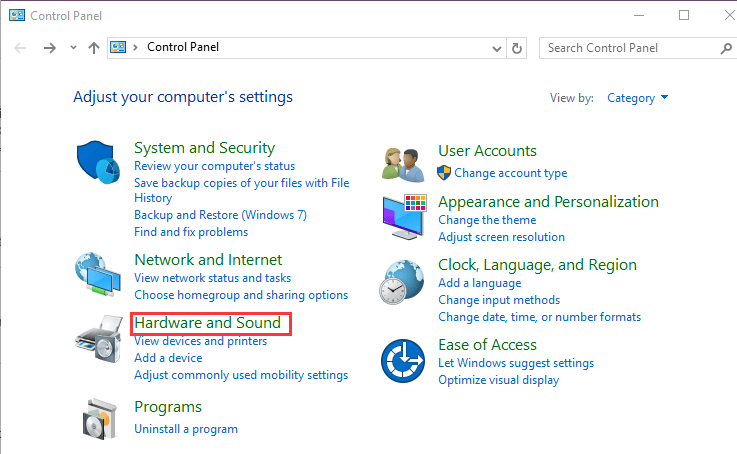
Look for the Hardware and Sound link. If you do not see it, select View by: Category in the upper right- hand corner. Click the Hardware and Sound link, then click the Sound icon or the Manage audio devices link underneath it. At the top of the Sound window, click on the either the Playback or Recordingtab.
Right- click anywhere in the box where the devices are listed. Click on Show Disabled Devices so there is a check mark next to it. This action displays any disabled device relevant to the category. If no new devices are found, it is because it is not detected by Windows. If you're having sound issues we'd suggest re- installing your sound drivers. Right- click any new (or previously existing) grayed- out icon(s) and select Properties or Enable. If you selected Properties, beside Device usage there is a drop- down menu.
UAC or User Access Control is a feature of Windows that is meant to enhance the security of your system. Each time an application is installed or whenever an. This article describes how to restore the Mail Recipient entry to the Send To menu in case it goes missing. This happens if the Mail Recipient.
Select on Use this device (enable). Click OK. Note: If you are still unable to locate your missing sound device, you may need to re- install it using the Windows Device Manager. Additional information. See our sound definition for further information and related links on this term.
Adding Bluetooth Devices in Windows 7. Introduction. The process of adding Bluetooth devices in Windows 7 is very different from adding them in Windows Vista. In this article, I will walk you through the process of adding a Bluetooth device in Windows 7 as well as give you some “gotchas” to watch out for so that the process runs smoothly. Recently, I bought a new Sony Vaio laptop that included a rebate for a free Bluetooth mouse and Windows 7. I enjoyed using the laptop for a couple of months before Windows 7 was released and these items arrived.
Sorry, no, doesn’t work. The problem is that since I upgraded to Windows 10, the Bluetooth icon *only* appears in the System Tray when Bluetooth is turned on. Introduction. The process of adding Bluetooth devices in Windows 7 is very different from adding them in Windows Vista. In this article, I will walk you through the.
In that time, I had used a small laptop USB mouse that works pretty well. Honestly, I may never have bought the Bluetooth mouse if it was not free. Still, I was interested in it enough to spend some significant time making it work. Perhaps it was the challenge of something new, that the mouse looked sleek and cool, or that I just was stubborn enough to make sure I got my free mouse working. No matter as, in the end, I got it working and am thankful that I did as this Bluetooth mouse is cool in every way and I would never go back to the old USB mouse. Bluetooth devices 1. Today, everyone is familiar with Bluetooth thanks to Bluetooth headsets that are very popular on cellular phones.
Bluetooth is wireless networking but it is short distance. Technically, when you use Bluetooth networking you are creating a Personal Area Network, or PAN. Other than those Bluetooth headsets that make peoples’ ears look like they are on Star Trek, there are a wide variety of Bluetooth devices. All you have to do is to look in the Bluetooth product directory and you will find that there are thousands of Bluetooth devices out there.
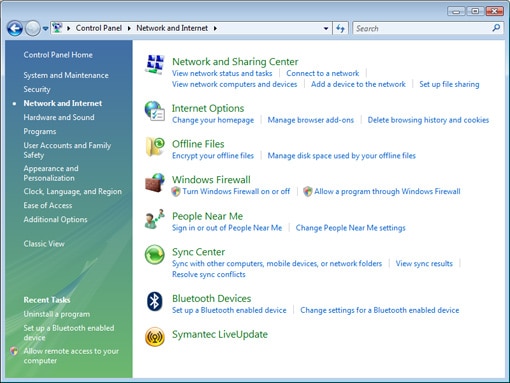
Besides the cellular phone headset, I would think that the second most common device is the Bluetooth mouse that many people use on a laptop. Adding one should be easy, right? Well, there may be more to it than you might think. Flashback to Windows Vista Bluetooth. Back in the “old” Windows Vista (Vista must be old now as Windows 7 is out, right?), to add a Bluetooth device you would simply go to Control Panel and click on Bluetooth Devices, as you see in Figure 1. Figure 1: Windows Vista Bluetooth Devices.

From there you could click on either Add Wireless Device or Bluetooth Settings. What could be easier, right? In Windows 7 that simple process has been changed in the name of progress. Let me show you how. The first time I went there to add my Bluetooth device, I was not sure what to do so I had to use the Search function and search for the word Bluetooth in order to find the option to add a Bluetooth device.
More from my site. How To Open Control Panel From Settings In Windows 10; How To Open Metro Control Panel (PC Settings) Using keyboard Shortcut In Windows 8. A complete list of Control Panel applets that you might find in Control Panel in Windows 8, Windows 7, Windows Vista, and Windows XP.


Still, you should not have to do that. Instead, what you need to do is to click on View Devices and Printers under Hardware and Sound, as you see in Figure 1. Figure 2: Control Panel in Windows 7.
From there, you will be taken to Devices and Printers, which (with the word printers in there), seems like a strange place to go to add a Bluetooth mouse. Figure 3: Adding a new Bluetooth device in Windows 7. Next, before you click Add a device (shown in Figure 2) you should first do a few things: Make sure that, if you have a laptop, wireless is enabled on the laptop (my Sony has a switch on the side). Bluetooth is wireless and, typically, when you disable all wireless that includes not only 8. Bluetooth. Make sure that any proprietary software you have that controls power or wireless has Bluetooth enabled (I will cover this more in the “gotchas”).
Turn on the power on the mouse and press the Connect button. Now, you can click Add a Device and you should see something like the graphic in Figure 3.
Figure 4: Locating the device to add. Select the device you want to add and click Next. The device drivers will be loaded and you should see the window in Figure 5. Figure 5: Bluetooth mouse has been added.
At this point, your mouse should be working. You can use it to click Close and you will be taken back to the Devices and Printers window where you can see your device. Ideally, adding Bluetooth devices should be that easy but there are some “gotchas” to look out for.“Gotchas” to Watch Out For When Adding Bluetooth Devices. To make sure that it goes as easily as I demonstrated above, look out for these potential pitfalls: Make sure that your laptop or PC actually has Bluetooth. You can not assume that it has it.
Make sure that your Bluetooth is ON. Your laptop might have a switch that enables or disables wireless. Make sure that any proprietary software you have that controls power or wireless has Bluetooth enabled.
On my Sony Vaio, I have a proprietary software application installed (from Sony) called Smart Wi Connection Utility that enables and disables various types of wireless connections, including Bluetooth. I ran into an issue where Bluetooth was disabled here and I had to track down this utility to enable it. Figure 6: Smart. Wi Connection Utility. Make sure that your Bluetooth device is powered on and make sure that it has some kind of LED indicating that it has power. While it may be obvious, that also means that your device has batteries that have a charge (fresh batteries are preferred).
You may have to press the Connect button on the Bluetooth device to get it talking to the Bluetooth adaptor on the PC or laptop. Make sure that the drive for your Bluetooth device is successfully installed, as you see in Figure 7 and Figure 8. Figure 7: Bluetooth Device Driver being Installed. Figure 8: Bluetooth Device Driver Installed.
Conclusion. In summary, the process of adding Bluetooth devices in Windows 7 is very different from adding them in Windows Vista. In this article, I walked you through the process of adding a Bluetooth device in Windows 7 and provided some “gotchas” to watch out for so that the process goes smoothly. I am loving my new Bluetooth mouse and I am sure that you enjoy the flexibility of the new Bluetooth device you add, just as much!


/https%3A%2F%2Fassets.over-blog.com%2Ft%2Fcedistic%2Fcamera.png)